Muddy Jobsites — Best Practices for Working in Wet Spring Soil

May 6, 2026

Mud is the defining challenge of spring excavation. It slows production, damages equipment, creates safety hazards, and can compromise the quality of finished work. At Precision Dig Excavation, we don't just accept mud — we manage it.


Understanding the Problem


Wet soil behaves differently than dry soil in almost every way that matters to excavation. It's heavier, stickier, less stable, and harder to compact. Equipment sinks, trenches collapse, spoil piles turn into slurry, and haul roads become impassable. Left unmanaged, a muddy jobsite can turn a three-day project into a two-week ordeal.


Site Access and Stabilization


The first priority is maintaining access to and across the site.


  • Timber mats or composite mats distribute equipment weight across a larger area and prevent machines from sinking. They're an added cost but can pay for themselves in saved time and reduced site damage.
  • Geotextile fabric laid beneath gravel access roads keeps stone from migrating into soft subsoil.
  • Gravel pads at entry points give trucks and equipment a stable surface to load and unload.
  • Designated haul routes prevent the entire site from getting chewed up. Restrict traffic to specific paths and reinforce them as needed.


Drainage Control


Water management is the single most effective thing you can do on a muddy site.


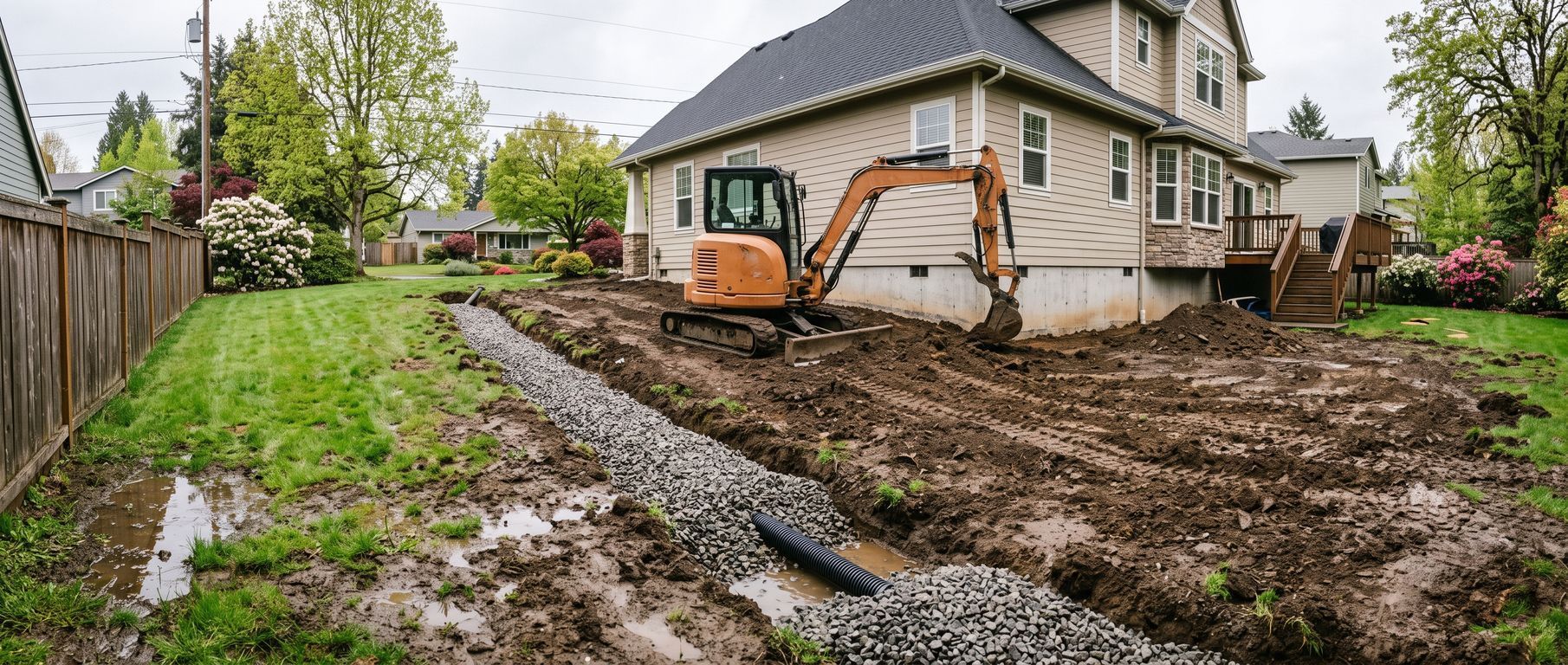
  • Diversion ditches route surface water away from the active work area.
  • Sump pits with pumps remove standing water from excavations.
  • Proper grading of temporary surfaces directs water toward designated collection points rather than letting it pool.
  • Silt fencing and sediment controls aren't just good practice — they're typically required by your erosion control permit.


Equipment Selection


Not all machines handle mud equally.


  • Wide-track or low-ground-pressure (LGP) excavators float better on soft ground.
  • Rubber-tracked machines cause less surface damage than steel tracks on finished or semi-finished areas.
  • Articulated dump trucks outperform rigid-frame trucks in soft conditions thanks to better weight distribution and maneuverability.


Protecting Work Quality


Even with good access and drainage, wet conditions can compromise the work itself.


  • Don't compact wet fill. It may pass a quick visual check but will settle dramatically once it dries. Wait for the right moisture content.
  • Stockpile dry backfill material under tarps so you have usable fill even after a rain event.
  • Test soil before placing structural fill. A simple hand test or proctor test tells you whether conditions are acceptable for compaction.


Crew Safety


Mud makes everything more dangerous. Slippery surfaces, unstable trench walls, and limited visibility are all heightened risks.


- Require proper footwear — steel-toe boots with aggressive tread.

- Re-evaluate trench stability after every rain event.

- Keep first-aid and spill kits accessible — not buried behind equipment on a soggy staging area.


The bottom line: You can't control the weather, but you can control how your site responds to it. A proactive approach to mud management keeps projects on track and protects your reputation for quality work.

You might also like
April 22, 2026
The body content of your post goes here. To edit this text, click on it and delete this default text and start typing your own or paste your own from a different source.
April 2, 2026
Spring is go-time for excavation contractors, and the last thing you need is a machine going down on Day One because it sat idle through the winter. At Precision Dig Excavation , a thorough pre-season maintenance routine is one of the first things we complete every year — because it protects our investment, keeps our crew safe, and prevents costly mid-project breakdowns. Hydraulic Systems Start with your hydraulic lines, fittings, and cylinders. Cold weather causes seals to contract and crack, and hoses can become brittle over months of inactivity. Look for any signs of leaking fluid, soft spots on hoses, or corrosion around fittings. Replace any suspect components before they fail under load. Check hydraulic fluid levels and quality. If fluid looks cloudy, dark, or has visible particles, it's time for a change. Contaminated hydraulic fluid is one of the top causes of pump failure in excavators. Undercarriage Inspection The undercarriage accounts for a significant percentage of your total machine maintenance costs. Inspect track tension, look for worn or missing bolts, and check for cracks in the track pads. Measure pin and bushing wear — if you're close to service limits, it's better to address it now than to lose a track mid-dig. For wheeled equipment, check tire pressure, tread depth, and sidewall condition. Winter storage on cold concrete can cause flat spots that may or may not work themselves out. Fluids and Filters Engine oil and filter — Change both, even if you did it before storage. Condensation can contaminate oil sitting in a cold engine. Coolant — Test antifreeze concentration and top off. Flush if it's been more than two years. Fuel — If equipment sat with fuel in the tank, check for water contamination and consider adding a fuel stabilizer or draining and refilling. DEF (Diesel Exhaust Fluid) — DEF can degrade over time, especially in temperature swings. Top off with fresh fluid. Electrical Systems Batteries are the most common winter casualty. Load-test every battery, clean terminals, and check cable connections. Inspect wiring harnesses for rodent damage — mice love to nest in idle equipment. Test all lights, strobes, backup alarms, and camera systems. These are safety-critical and often overlooked. Attachments and Buckets Inspect bucket teeth and cutting edges for wear. Dull or missing teeth slow production and increase fuel consumption. Check quick-coupler pins and locks to ensure attachments seat properly and securely. Greasing and Lubrication Hit every grease point on every machine. Joints that sat dry through the winter are joints that wear fast. Refer to your operator's manual for the full list of service points — most excavators have 15 to 20 or more. Create a Checklist and Assign Ownership  Don't leave pre-season maintenance to chance. Build a written checklist for each machine and assign a crew member to complete and sign off on it. Document everything — it protects you for warranty claims and demonstrates due diligence if there's ever an incident. The bottom line: A day or two of thorough maintenance now can save you weeks of downtime during your busiest and most profitable months. Treat spring prep like an investment, not a chore.
March 25, 2026
Every successful construction project begins beneath the surface. Before the first beam is raised or foundation poured, the ground itself must be carefully prepared. Professional excavation is the critical first step that determines whether a structure will stand strong for decades—or face costly problems from day one. At Precision Dig Excavation , we understand that what happens below ground is just as important as what rises above it. Why Excavation Matters More Than You Think Excavation is far more than simply digging a hole. It's a precise science that involves soil analysis, grading, drainage planning, and careful removal of earth to create a stable base for construction. When done correctly, professional excavation: Ensures structural integrity – Proper grading and compaction prevent settling, shifting, and foundation cracks that can compromise an entire building. Manages water flow – Expert excavators design slopes and drainage systems that direct water away from structures, preventing erosion and flooding. Identifies subsurface hazards – Professionals know how to detect and address buried utilities, unstable soil conditions, rock formations, and other obstacles before they become expensive surprises. Maintains regulatory compliance – Excavation work must meet local building codes, environmental regulations, and safety standards that vary by jurisdiction. The Risks of Cutting Corners Hiring inexperienced operators or attempting DIY excavation may seem cost-effective initially, but the consequences can be severe: Foundation failure requiring tens of thousands of dollars in repairs Flooded basements and chronic drainage issues Damaged utility lines leading to service disruptions, fines, or even injuries Project delays when work must be redone to meet code requirements Legal liability for accidents or environmental damage What Professional Excavation Includes At Precision Dig Excavation , we bring expertise across multiple disciplines to every project: Service : Purpose Site assessment : Evaluate soil composition, topography, and existing conditions Land clearing : Remove vegetation, debris, and obstacles Trenching : Create channels for utilities, drainage, and footings Grading : Shape the land for proper drainage and level building surfaces Backfilling : Properly compact soil around foundations and utilities Erosion control : Implement measures to protect the site during and after construction Choosing the Right Excavation Partner When selecting an excavation contractor, look for: Proper licensing and insurance – Protects you from liability Modern equipment – Ensures efficiency and precision Local experience – Familiarity with regional soil conditions and regulations Clear communication – Detailed estimates and project timelines Safety record – Commitment to protecting workers and property Precision Dig Excavation checks every box—delivering reliable, professional service backed by years of experience and a commitment to getting the job done right the first time. Build on a Solid Foundation Your construction project deserves to start right. Professional excavation isn't just a preliminary step—it's the foundation of your foundation. By investing in experienced excavation services, you protect your investment, avoid costly setbacks, and ensure your project is built to last. Ready to break ground? Contact Precision Dig Excavation today for a free site evaluation and estimate. Let's build something great—from the ground up.

Book a Service Today